What Happens When Operational Capacity Is No Longer the Constraint? Read the eBook →
A NEW OPERATING MODEL FOR SECURITY OPERATIONS

Your Tools Are Ready. Now Add the Teammates.

Bricklayer is the operating platform for the AI security workforce, giving security teams governed, coordinated AI teammates that work across their existing tools and data. Start in the SOC. Expand across security.

Proven for Security Operations

Bricklayer AI agents triage alerts, investigate threats, and reduce MTTR. Every alert gets the attention it deserves.

Completed
1,092,000
Tasks

With Our Coordinated AI Workforce

Saved
353,000
Analyst Hours

Equivalent of 176 Analyst Years

Realized
$25M+
in Productivity Gains

For Our Customers

With distributed agents, you can enforce guardrails and understand what each one is doing — that's what makes Bricklayer different from every other AI tool we evaluated.
Josh Domagalski CISO · Astronomer
We are saving thousands of analyst hours overall and being more impactful in terms of MTTR. Our team is finally working on the problems only humans can solve.
Matt Robinson CTO · Gruve

More Alerts.
More Isolated Tools.
Same Human Capacity.

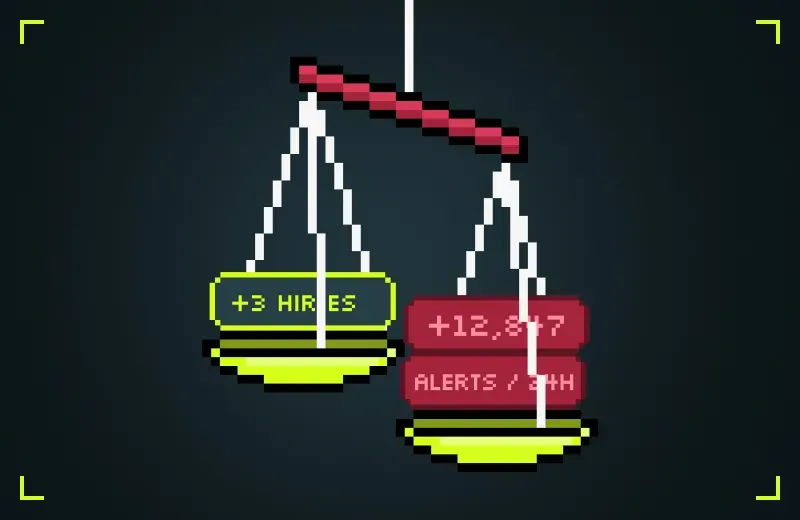
The volume of work is growing faster than human capacity. Siloed tools and teams are creating new operating friction, and security doesn't happen one prompt at a time, it's continuous work. The results? Alert overload. Inconsistent execution. Misguided decisions.

These Approaches Aren't Fixing It.

/ 01 Doesn't Scale

Hire More People

Skilled security talent is expensive, scarce, and takes time to ramp. Headcount can't scale as fast as threats, and every new hire multiplies onboarding overhead.

  • Talent supply can't keep pace with alert volume.
  • Ramp times stretch weeks before first value.
  • Linear cost model against exponential threat surface.
/ 02 Brittle

SOAR

SOAR platforms are brittle and hard to maintain. Without shared context and autonomous decision-making, they break down when you need them most.

  • Rigid playbooks fail on edge cases.
  • No shared context across tools and teams.
  • Constant maintenance tax on senior engineers.
/ 03 Uncoordinated

AI Point Solutions

Single-purpose agents only solve part of the problem. As every security vendor ships its own agents, tool sprawl is becoming agent sprawl, and the SOC often feels it first.

  • Isolated agents create parallel workflows.
  • No governance layer for outputs or handoffs.
  • More tools, more switching cost, same outcomes.
Incorporate AI Agents Into How Security Teams Actually Operate

Deploy a Governed, Coordinated AI Workforce.

Don’t just build AI agents. Bricklayer coordinates them as a governed team that understand your environment, work together, and operate under full human control — scaling the work your analysts can’t do alone.

Agents That Work The Way Your Team Does

An AI workforce needs more than intelligent models. It needs Context, Coordination, and Control for agents and analysts to successfully work together.

Get Started

Context

Every agent operates with full awareness of your environment. Tool data, threat intelligence, historical memory, and organizational context are baked in from the start.

Coordination

AI agents collaborate as a team and work alongside analysts in a shared workspace to guide procedures. Gain full visibility into plans, evidence, and reasoning at every step.

Control

You define how work gets done. Enforced policies, RBAC, and complete audit trails mean every AI agent action is visible, reviewable, and policy-compliant.

Connect the Security Operations Lifecycle

Today’s security teams aren’t solving isolated problems. Alerts, investigations, risk, intelligence, and hunting all feed into each other. Start with a high-value workflow, then expand.

Stay in the Loop

Get expert insights on building AI-native security operations delivered to your inbox.

Build an Agentic SOC Without Sacrificing Control

Watch Bricklayer investigate real security workflows using coordinated AI agents - all in 30 minutes. Move faster, without sacrificing visibility or governance.