Prompt engineering taught us how to make single AI agents useful. But as organizations move beyond one-off interactions to multi-agent systems that investigate, decide, and act, a new discipline is required.
Introducing Multi-Agent Context Engineering (MACE).
MACE is the practice of designing procedures as context containers – frameworks that capture, shape, and propagate meaning across chains of AI agents so they can collaborate effectively. Without MACE, multi-agent investigations collapse into brittle automations or isolated tasks.
With MACE, procedures preserve reasoning, accumulate evidence, and ensure every handoff between agents builds a richer picture of the problem – and a more humanlike, accurate path forward to solve that problem.
Enterprises are racing to deploy AI into complex investigative domains such as security operations, fraud detection, and compliance. Specialized agents are emerging – SOC Analyst Agents, Threat Intel Agents, Incident Response Agents – each capable of executing role-based tasks.
But there’s a gap. These agents don’t naturally share context. One agent might collect evidence, another might enrich it, and a third might summarize findings – yet without a container to carry context forward, the process is fragile. Investigations lose continuity, teams lose trust, and results are inconsistent.
Imagine if your human team simply performed tasks with no institutional knowledge or learning from past actions. Things may get done, but they aren’t quite right. That is how traditional AI methods work today.
Traditional SOAR playbooks were designed to move data, not to manage meaning. They trigger actions in sequence but lack awareness of why each step matters or how outcomes connect.
What are Investigations?
Investigations differ from routine workflows or transactional tasks. They are open-ended processes where the end state is not known at the beginning. Rather than moving data through a fixed sequence, investigations evolve as new evidence is discovered, hypotheses are tested, and decisions are made.
All investigations, in cybersecurity or otherwise, follow the same general formula:
1. Problem / Question — What are we trying to understand, explain, or solve?
a. Example (SOC): We received a suspicious alert from our SIEM. Is it a real incident?
2. Hypothesis — An initial explanation or assumption that can be tested.
a. Example: This alert may be tied to a phishing campaign targeting finance employees.
3. Evidence Gathering — Collecting logs, signals, threat intel, artifacts, etc
a. Example: Checking email headers, endpoint activity, related threat intel feeds.
4. Analysis — Evaluating the evidence to confirm or refute the hypothesis
a. Example: Correlating login anomalies with known phishing indicators
5. Conclusion — Confirming the hypothesis (incident) or dismissing it (false positive).
6. Action / Reporting — Documenting findings, escalating if needed, or closing the case.
Several qualities make cyberescurity investigations unique:
Uncertainty and Discovery
Investigations begin with incomplete or ambiguous signals that may indicate a much bigger problem — a suspicious alert, an anomaly, or a complaint. Each step generates new leads that reshape the path forward. The process is less about executing a checklist and more about progressively reducing uncertainty.
Iterative Reasoning
Evidence must be gathered, interpreted, and reinterpreted. A single fact often changes meaning once placed in a broader context. Investigations require branching logic, loops, and backtracking – patterns traditional automation struggles to represent.
Collaboration Across Roles
Whether in a SOC, a fraud team, or a compliance office, investigations involve multiple perspectives. One role may collect data, another may enrich it, and another may assess risk. Progress depends on these roles building on each other’s reasoning, not just passing data.
Accountability and Transparency
Every investigative conclusion must be explainable: why was a case closed, why was an incident escalated, why was a customer flagged? Investigations generate not just outcomes, but also audit trails that preserve the reasoning behind decisions.
Dynamic Endpoints
Unlike a workflow designed to always end with a transaction (e.g., an invoice paid), investigations may conclude in many ways — confirmed incident, false positive, escalation, or ongoing monitoring. The system must be flexible enough to support divergent outcomes.
Why Context Matters
Because investigations are uncertain, iterative, collaborative, accountable, and dynamic, they cannot be reduced to rigid scripts. Traditional automation frameworks were built for repeatable transactions; investigations require a framework that engineers and preserves context. This is the gap MACE fills.
When enterprises attempt to stitch together specialized AI agents without a framework for shared context, the result is fragile automation. The symptoms show up quickly:
Context Fractures at Every Handoff
Agents pass along raw data, but not the reasoning behind it. An evidence collector may find suspicious log entries, but when those are handed to an enrichment agent, the hypotheses and investigative thread disappear. Each agent starts from scratch, “blind” to the meaning of what came before.
Duplication and Drift
Without context, agents often redo the same work or pursue divergent paths. Indicators may be enriched twice, or conflicting interpretations may emerge. Investigations become inefficient and inconsistent, eroding confidence in the outcome.
Shallow Investigations
Traditional playbooks can still move data through a chain, but they cannot preserve meaning. When unexpected signals appear, the workflow stalls or fails, because no shared narrative ties the agents’ efforts together. Investigations degrade into brittle checklists rather than adaptive reasoning processes.
Breakdown of Trust and Accountability
Analysts and managers see only final outputs without understanding why they were reached. Was an indicator dismissed because it was benign, or because it was lost in a handoff? Without preserved context, decisions appear arbitrary, undermining trust and making auditing or compliance impossible.
Scalability Bottlenecks
Ironically, adding more agents without context engineering makes the problem worse. Each new role increases the number of fragile handoffs, creating a web of spaghetti workflows. Instead of scaling intelligence, organizations scale fragility.
In short, without MACE, multi-agent systems collapse into brittle automations. They lose continuity, duplicate effort, and produce outputs that humans cannot trust.
What is MACE?
Multi-Agent Context Engineering provides the missing discipline. It treats procedures not as simple workflows, but as context engineering containers.
MACE defines a lifecycle:
-
- Input Context Shaping — normalize raw alerts or signals into usable investigative inputs.
- Context Accumulation — layer evidence, reasoning, and annotations as agents act.
- Context Handoff — ensure each agent inherits not just data but meaning.
- Context Resolution — guide branching and decisions with clear rationale.
- Context Output — produce auditable, reusable artifacts of the investigation.
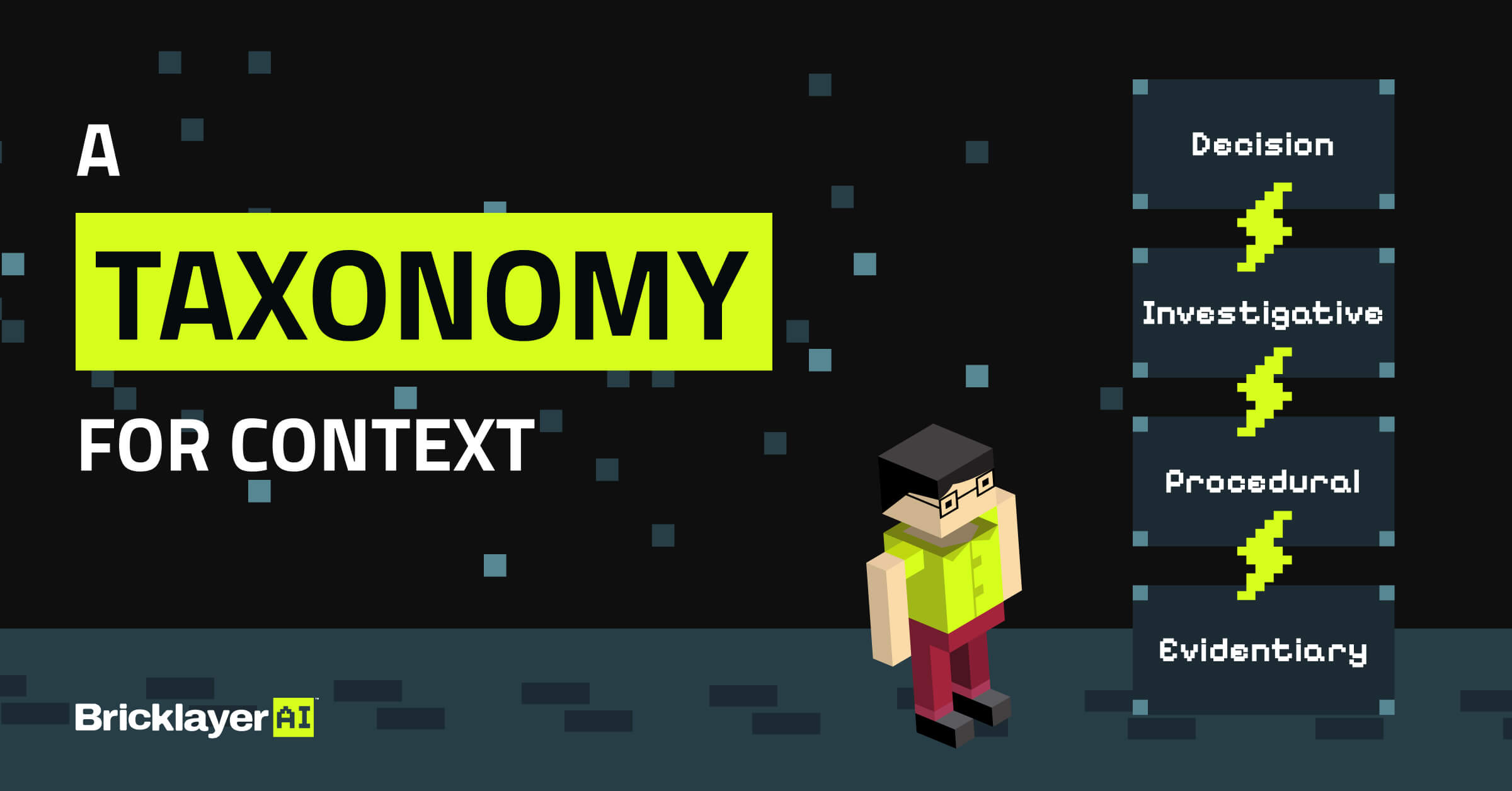
MACE distinguishes between different kinds of context, each with its own flow:
-
- Evidentiary Context — facts and artifacts collected.
- Procedural Context — what steps were taken and in what order.
- Investigative Context — reasoning, hypotheses, and interpretations.
- Decision Context — logic behind escalations or remediations.
By engineering these context flows, MACE creates procedures that behave less like scripts and more like investigative scaffolds – capturing and amplifying meaning at every step.
Why MACE is Essential for Cybersecurity
-
- Trust & Transparency — Every decision is backed by context, not black-box output.
- Efficiency & Scale — Agents don’t duplicate work; each builds on prior context.
- Extensibility — New agents plug in seamlessly without breaking investigations.
- Institutional Memory — Investigations leave reusable trails that strengthen over time.
Investigations are the proving ground for AI in the enterprise. They demand continuity, reasoning, and trust – qualities that brittle automations and isolated agents cannot provide. As organizations push AI deeper into domains like security operations, fraud, and compliance, the difference between success and failure will hinge on whether context is preserved across agents.
Multi-Agent Context Engineering (MACE) provides that foundation. By treating procedures as context containers, MACE transforms multi-agent systems from fragile workflows into resilient investigative frameworks. It ensures that every handoff builds meaning rather than loses it, every decision leaves an auditable trail, and every investigation contributes to institutional memory.
Just as prompt engineering unlocked the usefulness of single agents, MACE will define the era of collaborative, investigative AI. It is not merely an optimization – it is the discipline that allows enterprises to scale from experiments to transformation. The future of AI in complex domains will belong to those who master context.