Earlier this month at Knowledge 2026, Bill McDermott made a statement that immediately caught my attention:
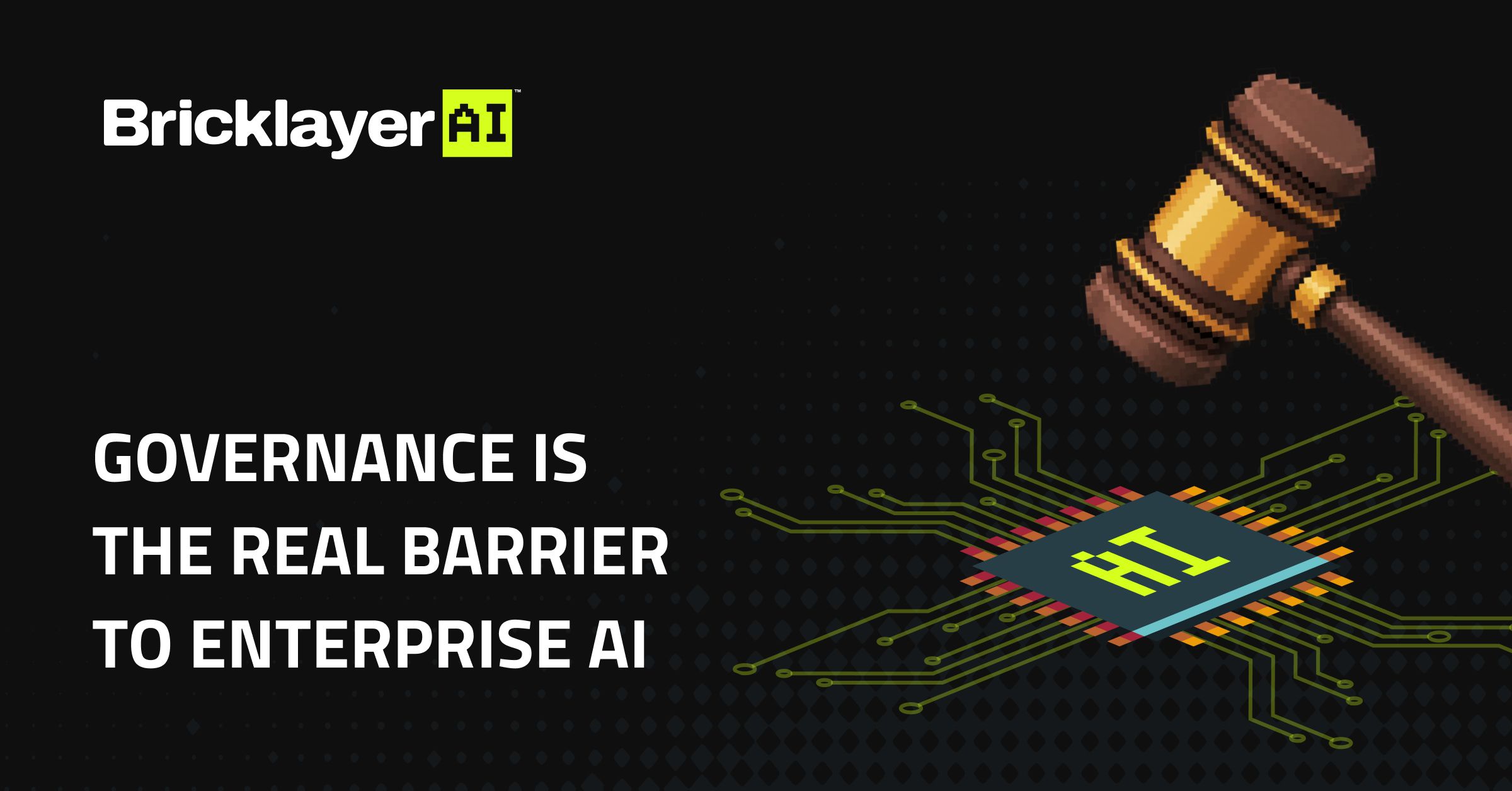
“Governance is the real barrier to enterprise AI adoption.”
I think he’s right.
Over the last two years, the technology industry has been consumed by a race to build AI agents. New models, copilots, orchestration frameworks, and autonomous workflows are emerging almost daily. The conversation has largely centered on what autonomous systems can do.
But far less attention has been given to the harder question of how those systems should be governed.
That is why I’m excited to announce that my patent for Systems & Methods for Agentic Policy Enforcement has officially been issued.
The patent describes a runtime enforcement architecture for AI agentic environments designed to bring deterministic governance and policy enforcement into autonomous multi-agent operations. The system introduces structured security labels across agents, tools, data sources, memory, and workflows. It enables runtime interception and policy evaluation of sensitive actions while making context-aware enforcement decisions based on role, sensitivity, execution level, lineage, and operational conditions.
The architecture also addresses one of the emerging challenges of decentralized agentic systems: maintaining governance continuity as work is delegated between agents. Security labels and policy context propagate across tasks, procedures, delegated workflows, and sub-tasks, allowing organizations to preserve operational boundaries even as autonomous systems dynamically coordinate work across multiple layers of execution.
The system provides full auditability across autonomous multi-agent activity. In a world increasingly driven by machine-speed operations, organizations will need more than intelligent agents. They will need systems capable of explaining why decisions were made, what actions were taken, and whether those actions remained within approved policy boundaries.
Anyone who has been on a Zoom call with me has probably noticed the two handmade chess boards sitting on the shelves behind me. I’ve always loved chess because it is ultimately a game about controlled coordination. Every piece has different capabilities, different authority, and different constraints. Success does not come from chaos. It comes from orchestrating complex actions within a governed system.
That is increasingly how I think about the future of AI agents.
The hard problem is no longer creating intelligence. The hard problem is coordinating autonomous systems safely, predictably, and at scale.
- How do you control what agents can access?
- How do you enforce organizational boundaries across multi-agent workflows?
- How do you prevent privilege escalation when agents delegate work to other agents?
- How do you ensure memory, tools, procedures, and data retain policy lineage as autonomous systems operate at machine speed?
These questions become especially important in cybersecurity, where AI agents interact with sensitive data, external tools, customer environments, threat intelligence, and operational workflows simultaneously. Cybersecurity may be the first domain where enterprises are forced to confront the governance problem head-on. In many ways, this is about introducing governance, control, and accountability into a technological landscape rapidly moving toward autonomous execution.
The market is beginning to recognize that agentic AI without governance quickly becomes operational chaos.
I believe the future belongs to governed autonomy at scale.
Not copilots.
Not disconnected AI tools.
Not uncontrolled agent swarms.
Enterprise AI will require systems capable of coordinating agents while enforcing organizational policy boundaries in real time. Governance will not become a secondary compliance feature layered onto AI after deployment. It will become the control plane that makes large-scale autonomous enterprise systems possible in the first place.
At Bricklayer AI, this philosophy has shaped how we think about the future of security operations from the very beginning:
Context.
Coordination.
Control.
The industry is moving quickly toward a world where enterprises will not operate a handful of AI agents, but thousands of them across security operations, infrastructure, workflows, and business systems.
When that happens, governance will no longer be optional.
It will become the control plane for enterprise AI itself.
And we’re just getting started.