The perimeter didn’t disappear. It just stopped mattering. What replaces it, and what that means for the people running SOCs today, is the real question.
If you’ve run a SOC for more than a few years, you’ve watched the job quietly transform around you. The tools multiplied. The alert volumes climbed. The dwell time statistics kept drifting in the wrong direction. And somewhere along the way, the team shifted from investigating threats to managing the machinery of investigation itself.
That shift didn’t happen because security leaders made a strategic choice. It happened because the threat environment forced it.
The speed problem nobody talks about honestly
Attackers have automated significant portions of their operations. Reconnaissance, vulnerability identification, lateral movement, exfiltration: sequences that once required hands-on-keyboard time across hours or days now execute in minutes. Modern ransomware groups operate with the discipline of well-run businesses. Playbooks, tooling, defined roles.
Meanwhile, the defensive response model has stayed largely the same. An alert fires. An analyst picks it up, if the queue allows. They enrich indicators manually, pivot across three or four disconnected tools, reconstruct intent from fragmented telemetry, and eventually form a judgment. In a well-staffed environment with experienced analysts, that process might take thirty minutes. In most environments, it takes longer.
The math doesn’t work. You cannot manually investigate threats that move at machine speed. The gap isn’t a staffing problem. It’s a structural one.
The issue isn’t that SOC teams are ineffective. It’s that they’re being asked to function as a control layer in an environment that now demands continuous, automated response.
Why more tooling made it worse
The instinct was understandable, and almost universal: throw tools at the problem. SIEMs got bigger. EDR platforms got more capable. Threat intelligence feeds multiplied. SOAR promised to tie it all together with playbooks.
But most organizations that deployed SOAR didn’t get autonomous response. They got automated ticket routing and Slack notifications. The playbooks required constant maintenance. Every new tool added another data source, another interface, another queue demanding attention. The analyst’s job got more complex without getting faster.
Experienced practitioners know this firsthand. The average enterprise SOC now ingests data from 40 or more security tools. Correlation across those sources happens inconsistently. Context gets lost between handoffs. And the cognitive load on analysts, who are expected to hold the full picture in their heads, keeps climbing.
The model that actually fits the problem
The human immune system is a useful frame here, not because it’s a perfect analogy, but because it solves the exact problem SOC teams are struggling with.
The immune system doesn’t try to keep every pathogen out. It assumes breach is inevitable and invests in what happens next: continuous monitoring, rapid anomaly detection, coordinated multi-layer response, and memory that improves future performance. Critically, these functions happen autonomously and in parallel. Not sequentially, and not dependent on a single decision-maker reviewing each case.
The emerging architecture for security operations follows similar logic. Instead of a linear chain of alert, enrich, investigate, respond, investigations are broken into discrete, parallelized tasks. Enrichment happens automatically and continuously. Correlation is structural, not manual. Context is preserved across the investigation rather than recreated at each handoff. Actions are governed by defined policies with human oversight at the decision points that matter.
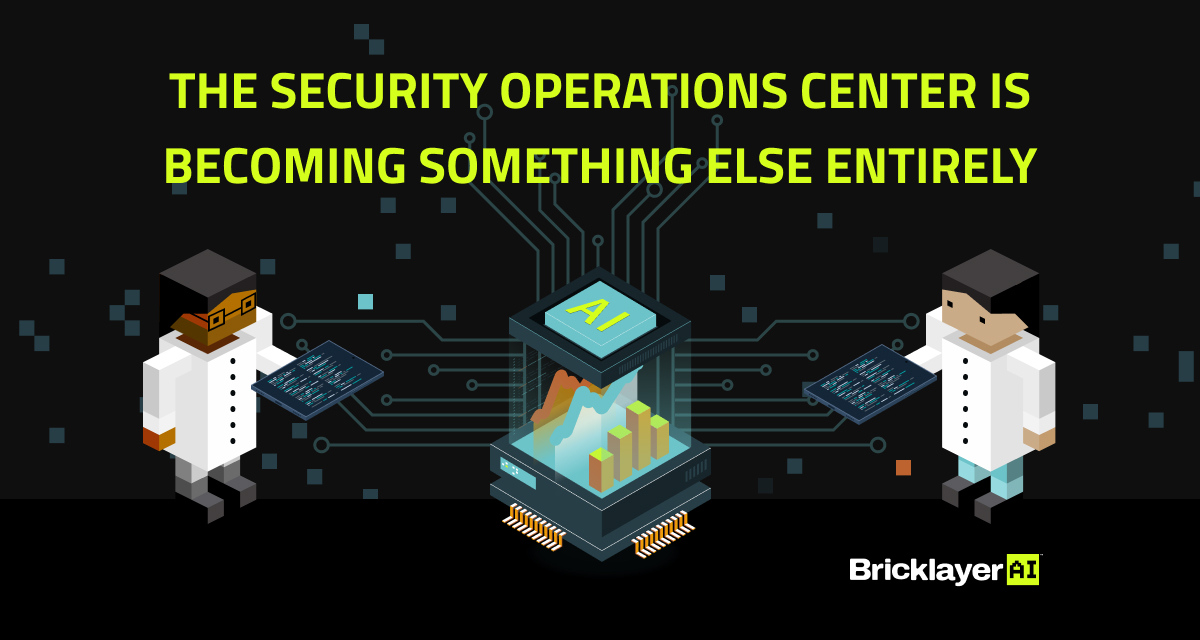
This is what agentic security operations looks like in practice. Not a single AI that “does security.” A coordinated system of specialized agents, each with a defined function, that handles the investigative work currently consuming the majority of analyst time, so that human judgment gets applied where it actually belongs: to decisions that require context, nuance, and accountability.
What changes for the people running these teams
For SOC owners and CISOs, the operational shift is significant, and the organizational implications are still being worked out.
The analyst role changes. Instead of executing every step of an investigation manually, analysts supervise and validate automated processes, handle escalations, and refine the procedures that govern how the system behaves. The highest-value work, things like threat hunting, contextual judgment on ambiguous alerts, and communication with leadership, gets more time.
The skill profile shifts too. The next generation of SOC talent will need to understand how automated systems make decisions, where they fail, and how to tune them. That’s a different capability than manual SIEM triage, and organizations should be thinking now about how to develop it.
The reporting story also improves. One persistent frustration for security leaders is the difficulty of demonstrating operational effectiveness to boards and executives. A coordinated, auditable response system produces the evidence trail that manual processes can’t: every decision documented, every action traceable, every outcome measurable.
Beyond the Perimeter
Attackers will continue to automate. The cost of purely manual defense will continue to rise. The organizations that figure out how to deploy human judgment where it matters, and automate everything else, will be meaningfully better positioned than those that don’t.
The past decade was defined by building stronger walls. The next will be defined by what happens when those walls are breached, and whether the system on the other side can respond faster than the threat.
Seeing agentic security operations described is one thing. Watching it work inside your own environment, with your own alerts, your own data, your own response workflows, is something else entirely. If you’re evaluating what this looks like in practice, it’s worth 30 minutes of your time to request a demo.
Because the Security Operations Center is becoming something else entirely.