Why the SOC is moving beyond a SIEM-centered architecture to a coordinated system of product-aware agents.
For years, the center of gravity in the security operations center has been the SIEM. Security products generate alerts and telemetry; the SIEM collects and searches that information; analysts pivot between consoles to establish context and decide what to do. Automation can help carry out response steps, often through integrations and playbooks designed in advance.
That model has delivered real value. But as security environments grow more distributed, and as AI agents become capable of investigating and taking actions, the SOC has an opportunity to change how its work is coordinated.
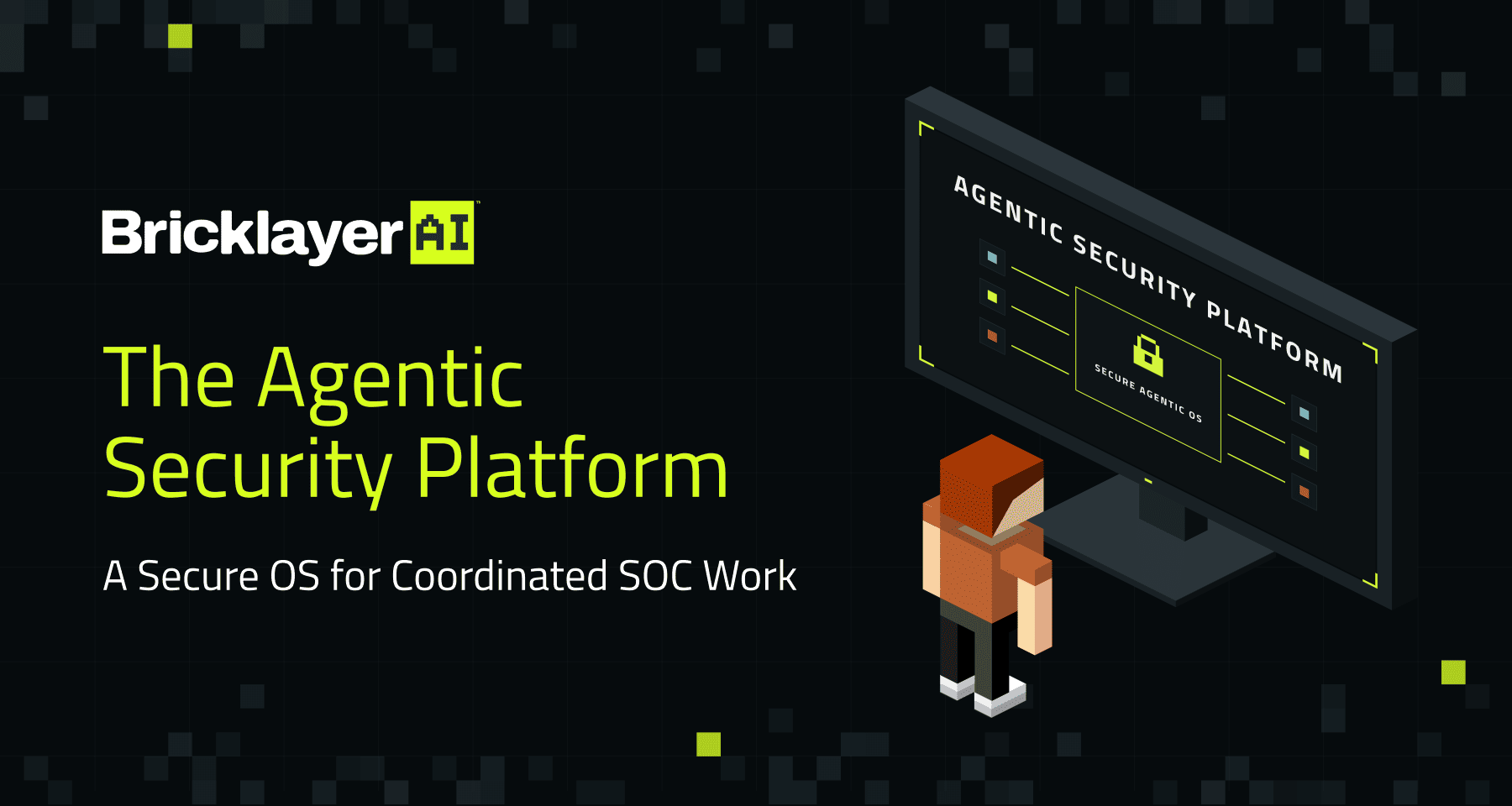
The next architecture is an agentic security platform that coordinates work across those products. At its center is a secure agentic operating system: the built-in foundation for shared context, process orchestration, agent identity, policy enforcement, and governed execution. The operating system (OS) is not a separate product sitting beside the platform. It is what lets the platform operate as one coherent security system while product-aware agents bring expertise from each connected tool.

Product agents investigate their tools, share findings with the platform, and carry out approved actions.
Let each product have an expert
Security products are not interchangeable sources of alerts. An endpoint platform has its own investigation data and response actions. An identity platform has different signals and controls. A cloud security product brings another set of relationships, resource models, and remediation options.
A product-aware agent can work with those details directly. It can interpret the product’s findings, gather relevant evidence, and use the actions the product supports. Rather than sending every raw event to a central intelligence and expecting it to understand every product’s quirks, the system can ask the agent closest to the data to investigate and report what it found.
The agent’s output should be more useful than a second alert. It should include a clear finding, supporting evidence, confidence, relevant entities, and references back to the source. That gives other agents and the coordinating process something they can evaluate and act on without losing provenance.
Coordinate the process across products
Local expertise alone does not make a SOC. The value appears when product agents can contribute to one shared process.
Imagine an endpoint agent reporting suspicious activity on a device. An identity agent checks whether the associated user has unusual sign-in activity. A vulnerability agent adds relevant exposure context. The agentic security platform brings those findings together through its built-in secure agentic OS, maintains the incident state, and determines what should happen next. If the process calls for containment, it can request the appropriate action from the endpoint agent and record the result in the case-management system.
The important shift is that the process can move across products through the agents that know how to use them. Analysts do not have to carry every piece of context from console to console, and the SIEM does not have to be the only place where correlation and workflow logic live.
Improve at two levels
This architecture creates two connected opportunities to improve.
First, each product agent can improve within its own domain. Feedback can help it distinguish useful signals, gather better evidence, and make more relevant recommendations for its product.
Second, the platform’s operating system can improve how it connects findings and coordinates work across products. It can learn which combinations of evidence matter, which process steps resolve cases effectively, and where handoffs or missing context slow the work down.
That creates a feedback loop: the agents improve their local work, while the platform’s operating system improves how the SOC works as a whole. This does not require every agent to modify itself freely. In a security environment, improvement needs evaluation, versioning, policy, and an audit trail. Changes to behavior or procedures should be measured and reviewed before they affect production work.
The SIEM still matters
An agentic security platform with a secure operating system at its core does not mean the SIEM goes away. SIEMs remain valuable for telemetry retention, compliance, broad search, and investigations that need historical or cross-source data. They may also continue to supply events and context to product agents and coordination processes.
The change is in the SIEM’s role. Instead of serving as the sole center where every alert must be understood and every process coordinated, the SIEM becomes one important system connected to the agentic security platform. The platform coordinates findings and directs governed actions across the SIEM and other products, while the SIEM continues to do what it does well.
The secure agentic OS is the platform’s control foundation
When agents can change security products, the platform’s built-in operating system must provide control. Each agent needs a defined identity and narrowly scoped permissions. The system should evaluate actions against organizational policy, require human approval when appropriate, and preserve a complete record of evidence, decisions, approvals, and outcomes.
It also needs a consistent way to describe findings without erasing the meaning of each source product. Common structures can make findings easier to correlate, while provenance and product-specific details keep them trustworthy. Actions should be explicit, attributable, and verifiable.
These are not secondary implementation details. They are what make it possible for organizations to trust agents with operational work.
What comes next: start with a bounded pilot
A practical first step is to pilot one investigation that depends on more than one product. For example, when an endpoint agent sees suspicious activity, it can gather evidence from the endpoint platform while an identity agent checks for related sign-in or account activity. The platform can assemble the evidence through its built-in OS, explain how the findings relate, and recommend next steps.
The first version can run in read-only mode. Analysts review the findings and recommendations, and approve any containment action—such as isolating a device or disabling an account. This gives the team a way to evaluate the quality of the investigation and the cross-product reasoning before allowing actions to run automatically.
Measure the pilot against a baseline: time to investigate, completeness of the evidence, accuracy of escalations, analyst effort, and whether approved actions were recorded and verified. Test representative benign and malicious scenarios, and use the results to decide what to refine and what level of automation is justified. The goal is to prove the platform’s coordination loop on a narrow workflow before extending it to more products or processes.
From alert aggregation to coordinated security work
The future SOC is unlikely to be defined by a single replacement for the SIEM. A more meaningful change is a new operating model centered on an agentic security platform. Product-aware agents bring expertise to each tool, while the platform’s built-in secure agentic OS provides shared context, coordination, identity, policy, and governed action. Feedback helps both the product agents and the overall process improve.
At Bricklayer, we believe the SOC should operate through an agentic security platform that connects security products as one coordinated system, bringing detection, investigation, vulnerability context, threat intelligence, and response together through a secure agentic OS built into the platform. This provides a foundation for extending coordinated agent-driven work beyond traditional SOC workflows and across the broader security organization. The goal is not simply to put an assistant in every console. It is to let specialized agents work together, with the context and controls needed to make security operations more effective.